

On 30 June, a consortium called Open Standard announced Open USD (OUSD), a dollar stablecoin backed by more than 140 companies including Visa, Mastercard, American Express, Stripe, BlackRock, Coinbase, Google, Shopify and BNY.
Circle stock $CRCL fell 17% on the day and now trades around $66, a market cap of roughly $15.7 billion. Circle is down 20% YTD and over 70% from all-time highs.
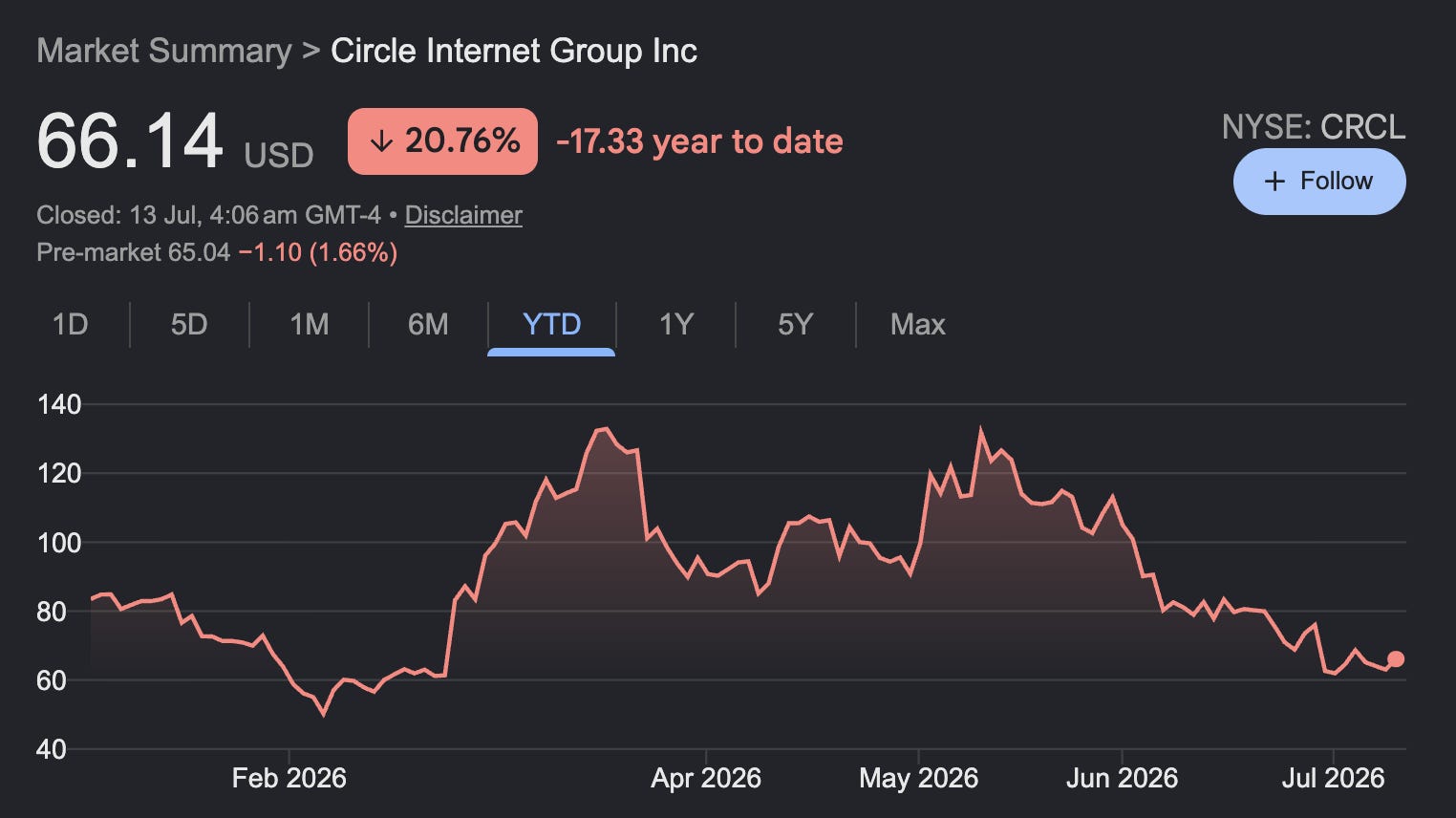
Two months ago, I published my Circle deep dive and said I would get interested below $80. We are now well below $80, but the fundamental picture has also changed. In this post, I will discuss what has changed and my plans moving forward.
Circle Internet Group (Deep Dive)

Circle operates the world’s largest regulated stablecoin network, and the second largest stablecoin (USDC) behind only Tether (USDT), which remains private.
What Open USD Actually Is

OUSD is run by an independent company led by Zach Abrams, co-founder of Bridge (the stablecoin firm Stripe acquired for $1.1 billion). The design has three defining features:
Partners can mint and redeem at zero cost with no volume caps.
Nearly all interest earned on reserves flows back to partners after a management fee.
Governance sits with an independent board of partner companies rather than any single firm.
It launches natively on Solana later in 2026. Coinbase has confirmed OUSD will also be launching on Base, and Stripe says it will make OUSD the default stablecoin for businesses on its platform.
How This Affects Circle
I think this has several wide-ranging impacts on Circle, if successful. We will debate the likelihood of success later, but let’s assume for argument sake that this is successful.
Coinbase re-negotiation
Coinbase and Circle have a revenue-sharing agreement which expires next month, and Coinbase now negotiates as a founding member of the rival consortium.
Circle currently keeps roughly 40 cents of every gross revenue dollar. I find it hard to see this going higher post-August. I believe the renewal will happen, and odds are that terms are unchanged. However, there is now a likelihood that Circle gets worse terms, and the probability of Circle getting a better deal than the one they have now is most likely zero.
Neutrality moat
In my view, and as I discussed in the deep dive, I believe Circle’s strongest moat is market neutrality. It is seen as the most credible stablecoin, and one that competitors could build on without conflict.
The consortium structure replicates neutrality through shared governance. For instance, we have Visa and Mastercard, clear rivals, both co-owning one coin. If OUSD gains traction, it would be a legitimate contender.
Enterprise and payment flows
One huge advantage for OUSD is that it has all the tools to build massive volume. Stripe making OUSD the default for platform businesses attacks precisely the segment Circle identified as its next growth leg: B2B payments, merchant settlement, CPN corridors.
If OUSD becomes the settlement asset inside Stripe, Shopify and the card networks, we could see an explosion in volume. At the same time, Circle's payments expansion story could get boxed into crypto-native and emerging market channels.
The re-pricing of distribution
OUSD’s model is a direct counter-position to USDC. Circle’s model treats distribution as a cost to be negotiated bilaterally while OUSD's model makes distribution the shareholder where nearly all reserve yield goes to partners by design.
Every future Circle partnership negotiation would therefore happen against that benchmark. For instance, Binance, wallets, neobanks would compare what a consortium would pay them and use it as a benchmark. This damages Circle even if OUSD never launches, and is therefore the most immediate and permanent impact.
OUSD is not a done deal, nor a guarantee
This is not the first time that a consortium has come together to build shared money rails.
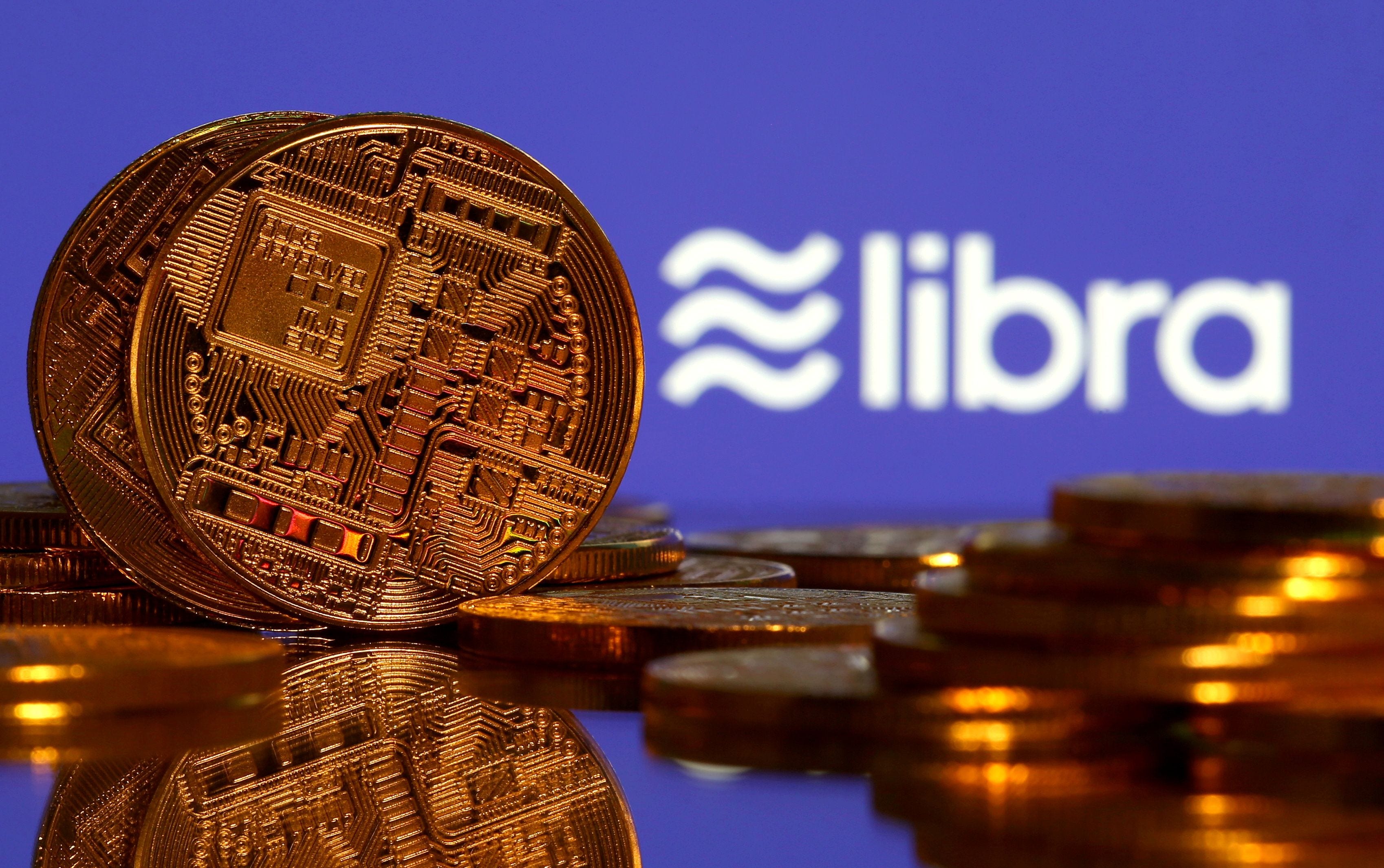
In June 2019, Facebook unveiled a stablecoin (Libra) backed by a Geneva-based association of 28 founding members including Visa, Mastercard, Stripe, PayPal and eBay. The pitch was nearly identical to OUSD's, with shared governance, no single owner, a neutral digital dollar for the internet. Within five months, PayPal, Visa, Mastercard, Stripe and eBay all walked out under regulatory pressure.
Three of the companies that abandoned Libra at the first sign of regulatory heat (Visa, Mastercard and Stripe) are now founding partners of Open USD.
The second precedent is a working project. The Global Dollar Network (USDG), launched in late 2024 by Paxos with Kraken, Robinhood, Galaxy and Anchorage is a functional OUSD blueprint. It is a consortium coin that shares nearly all reserve yield with distribution partners. It has everything OUSD promises, including yield sharing, real exchange distribution and a fully licensed issuer, which is more than OUSD currently has.
18 months in, USDG has gathered roughly $3 billion against USDC's $74 billion. Yield sharing alone evidently does not create demand.
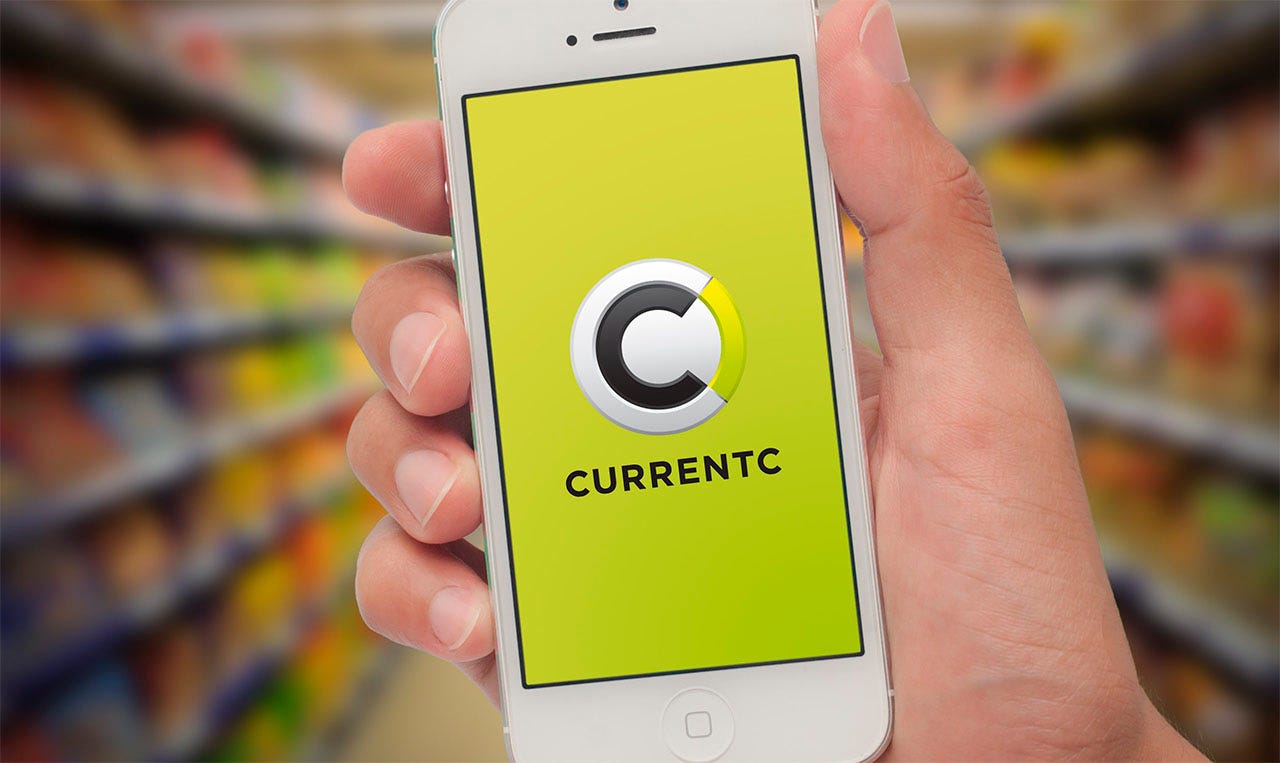
We can also go further back beyond stablecoins. In 2012, the merchant consortium behind CurrentC, assembled Walmart, Target, Best Buy and dozens of other retailers to build a shared payments network and kill card interchange. The incentive to cooperate was obvious and enormous.
However, the product never got out of pilot, because every member had its own priorities and they didn’t deploy their best engineers to work on it. Apple Pay emerged and took the market. I believe the issue is with consortiums. They are excellent at announcing partnerships, signing memoranda, but poor at actually getting stuff done.
Apart from this, I believe there are also a few other reasons Open USD is unlikely to gain traction:
The incentives are questionable
OUSD's incentive architecture is funded by reserve yield, and reserve yield requires float. The partners incentivised to push OUSD (Stripe, Shopify, the card networks) are payments companies whose flows generate velocity, which produces volumes but almost no balances. There are of course banks too, such as BNY, DBS, Standard Chartered, U.S. Bank, BBVA. However, they are structurally disincentivised from moving them, because every dollar of client deposits converted into OUSD leaves the bank's balance sheet.
It therefore trades a 3%+ net interest margin franchise for a diluted share of ~4% reserve yield, and cannibalises the deposit base that banks ultimately care most about. I believe banks are in the consortium because they want the optionality. However, it will not be a priority.
No named issuer, custodian or reserve detail
As it stands, there are no disclosures on which regulated entity issues OUSD, in which jurisdictions, or under whose supervision. There are tons of requirements that will be required to launch a stablecoin and these are questions that remain unanswered today.
The launch of OUSD is the easy part, what comes next is probably the toughest.
Membership is a free option, not a commitment
The most impressive part, where there are 140+ partners for OUSD, I believe also reveals the weakest point. There are no capital commitments, exclusivity or minimum volumes disclosed.
For Visa and Mastercard, membership is cheap insurance against disintermediation. Coinbase earns billions from USDC economics and joined anyway, proving membership is compatible with betting on the incumbent. I think this dis-incentivises partners from wanting this to succeed.
Committee products lose to owned products
As we discussed earlier, we’ve seen many cases of ideas like this that have surfaced and disappeared. CurrentC had Walmart, Target etc, but never gained traction. OUSD's competition is Circle, which shipped CCTP, CPN, Gateway and Arc in under three years, and Tether, which is one of the most impressive businesses in the world, garnering the most dollars per employee of any company in the world.
Float is the largest unsolved issue
USDC's ~$74 billion and Tether's ~$190 billion sit in exchange trading collateral, DeFi positions, emerging market dollar savings and crypto-native treasuries, and OUSD has no distribution edge in any of them. The marginal holder in Buenos Aires or Lagos holds USDT because everyone around them does. Offshore trading collateral is Tether's fortress, where no consortium member operates. It will be tough to disrupt the incumbents.
Where does this leave Circle?
Near term, I believe Circle should be fine. USDC adoption will continue growing steadily. I think OUSD is a 2027/2028 and beyond issue where the specific worry is with terminal value, and specifically a terminal margin problem.
Even in scenarios where OUSD underwhelms, the multiple the market assigns to a "winner-take-most" reserve income stream has to come down when the winners' biggest customers have publicly organised an alternative.
While CRCL now trades at $66 which was an attractive entry point based on my deep dive, the facts have indeed changed. All the assumptions used in the valuation model therefore also have to change.
Personally, I am watching 3 things:
The terms of the Coinbase renewal in August.
Whether/when OUSD names its issuing entity and licensing structure.
RLDC margin trajectory in the quarters ahead.
I hope this was helpful!
-Gab